
Mecklenburg County Court Calendars Explained
Mecklenburg County runs on one statewide court system, yet a hearing date can surface through several channels. The most case-specific online tool is Portal Search Hearings. The North Carolina eCourts Portal also tucks a Hearings section into the Smart Search Case Summary, which serves as the court's chronological Register of Actions. Treat those electronic results as a first read. Stack them against the county's schedule postings. When a setting is near or murky, call Caseflow Management, a coordinator, or the Mecklenburg County Clerk of Superior Court.
Local schedules do a different job. They show court divisions and courtroom and judicial assignments. They also carry calendar calls, trial calendars, and some session orders. In short, they tell you what court is operating. The case hearing tells you whether your matter is actually set. Mecklenburg's published material splits District Court from Superior Court, and everything flows through the unified Clerk system rather than any separate city or municipal court records.
For the official postings, see the Mecklenburg local administrative schedules.
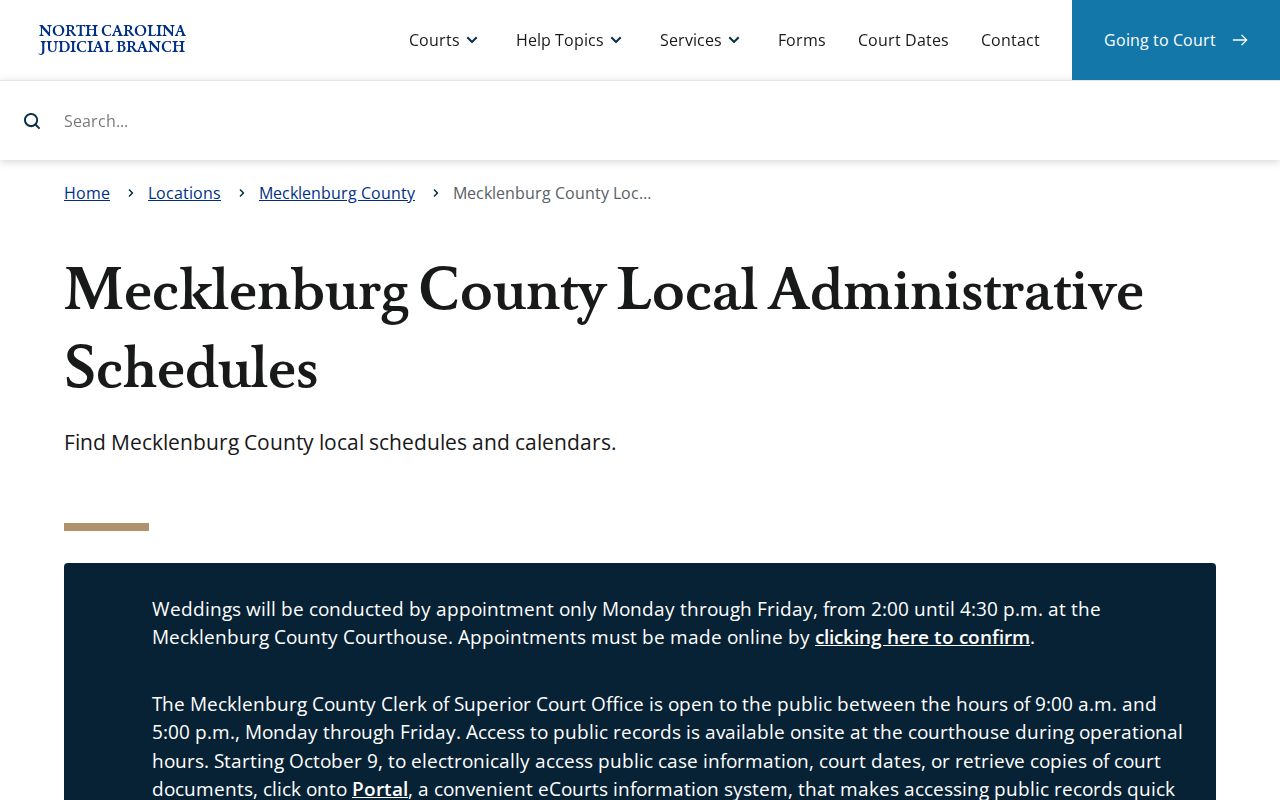
Their District and Superior Court categories help you place a Mecklenburg hearing in the right session. They are not a substitute for the latest hearing entry on the case itself.
Mecklenburg Court Calendar Search Hearings
Search Hearings lives inside Portal and is Mecklenburg's most direct current-calendar tool. A case number makes the best starting point. Party name works too. So do business name, attorney name or bar number, judicial officer, courtroom, and a date range. One criterion is required at minimum. A long courtroom menu may appear. The official training material suggests typing its first letters to trim the list. Party-name searching helps when no case number is handy, but proceed with care. Portal is statewide, and a common name can pull cases from several counties.
Begin with the case number or party name. Then, if the results sprawl, filter by the Mecklenburg location and a tight date range. Open the result and check the date, time, courtroom, and hearing type against the Case Summary. For confirming a current Mecklenburg court date, this beats trusting an older event line. Still, it is only a search aid. No search promises that a courtroom will not change later.
The state's civil-calendar interface carries the official calendar postings.
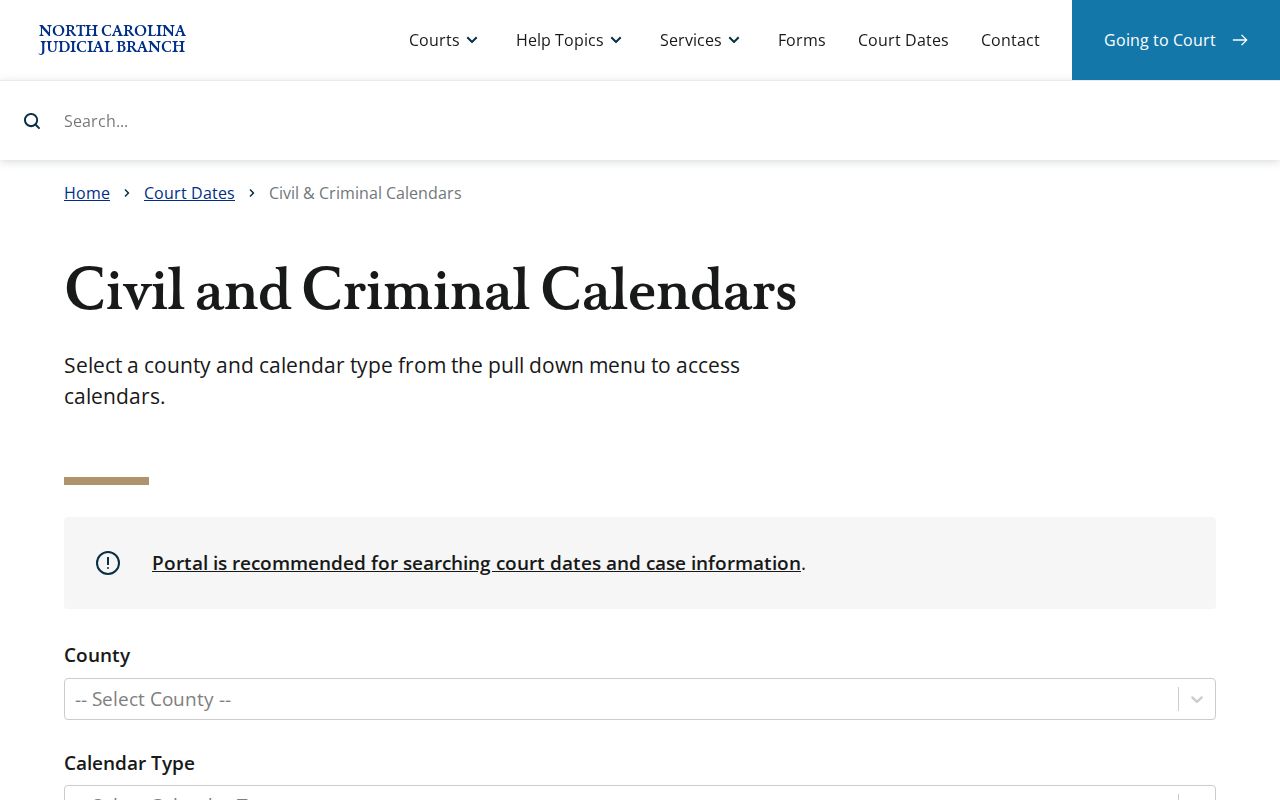
Match each calendar result back to the Mecklenburg court record. That connection ties the search hit to the exact case and its latest setting details.
Finding Your Court Date
You can check a Mecklenburg court date online and then confirm it through local court channels. Never lean on a session title alone. A schedule may list a trial week, motions block, calendar call, or courtroom assignment without proving that every matter on it starts at the same hour. When travel or a deadline rides on the answer, take the latest case-specific hearing as your anchor. Then use whichever local fallback fits the case type.
- Open Portal, choose Smart Search, and locate the Mecklenburg case by case number, citation number, or party name. Read the Hearings and Case Events information.
- Run Search Hearings with the case number or party name. Add the judicial officer, courtroom, or date range only when needed to narrow the result.
- Compare the case result with the local administrative schedule to understand the session, court division, and courtroom context.
- If the setting looks moved, stale, or unavailable, call Caseflow Management at 704-686-0185, the listed coordinator for the case category, or the Clerk at 704-686-0400 to confirm it.
- For a missing online record, use the Clerk counter and public self-service terminals at the Mecklenburg County Courthouse. A pre-conversion document may require the appropriate Clerk division’s email-request route.
Older Mecklenburg records raise one wrinkle. A criminal, civil, estate, or special-proceeding document may predate the eCourts conversion. It may sit outside Portal entirely. In that situation, the county location page steers the requester to the right division and asks for the record type, the party name or names, and the file number if known. No response time is guaranteed. The Clerk remains the place to call for a current status check.
Mecklenburg Court Date Schedule Checks
Portal hearing results and local schedules answer different questions. For the current event tied to one Mecklenburg case, use a case-specific search. For the court's operating session, a posted calendar call, or an assignment by courtroom and judge, use the local schedule. Reading both heads off a common mistake. That mistake is treating a trial order or calendar-call list as a firm individual hearing time.
| Portal hearing result | Mecklenburg local schedule |
|---|---|
| Searches a case or party for a current hearing. | Posts District and Superior Court assignments, calendars, and orders. |
| Can show case number, party or business, courtroom, judicial officer, and date range details. | Can show court division, courtroom or judge assignment, session start, and local category. |
| Use it to identify the case-specific setting. | Use it to interpret the session and watch for posted changes. |
Neither source settles things once a Mecklenburg setting has been continued or reset, or is close enough that a change would matter. Postings can shift. The latest case-specific hearing stands as the working electronic date.
How to Read a Court Setting
A Mecklenburg court setting is more than a date on a list. Read the case number first. Then pull out the hearing's date, time, location, judicial officer, and event label. A Case Summary may hold a stack of earlier events. Pull out the latest hearing entry. Do not confuse it with a past appearance or an administrative posting. A courtroom number means more once you match it to the courthouse map. Then check the applicable local schedule.
| Date | The scheduled calendar date for the recorded Mecklenburg hearing. |
|---|---|
| Time | The listed time for the hearing or calendar call; a session time is not always an individual trial time. |
| Courtroom | The local room or hearing location. Use the official schedule and courthouse map for context. |
| Judicial officer | The officer shown in the hearing search or local assignment, subject to later reassignment. |
| Setting type | The event label, such as calendar call, motions calendar, first appearance, or trial calendar. |
Note: A Mecklenburg courtroom or judge assignment can explain the session, but the case-specific hearing is the key item to confirm.
Mecklenburg Court Calendar Labels
The labels on a Mecklenburg court calendar describe session management, not results. Think of them as housekeeping for groups of cases. Local schedules cover domestic calendar calls, attorney trial calendars, administrative and motions sessions, and several Superior criminal trial-order categories. Some category pages read "None at this time." That only means the posting is absent for now. It says nothing about a dismissal, and it does not mean the courthouse has stopped hearing that type of matter.
- Calendar Call
- A pre-session call used to organize matters for an upcoming court term.
- Attorney Trial Calendar
- A group of matters assigned for a counsel-ready trial session, not an assurance each case will be reached on one day.
- Motions Calendar
- A hearing block for motions rather than a merits trial.
- Preliminary Trial Order
- A Superior criminal trial-order category that still requires a Case Summary check for an individual date.
- Misdemeanor Appeal Trial
- A Superior Court setting after an appeal from District Court.
These labels earn their keep in one spot. A Mecklenburg Portal result may show a courtroom or a hearing entry while the schedule speaks in broader session language. Read the court's category and the current case hearing side by side.
Continuances, Resets, and Cancellations
A continuance pushes a Mecklenburg court date to another day. Locals often call that a reset. Either way, the case is still alive. The Portal Case Summary can leave an old event in place even after a hearing moves, so the newest case-specific entry and the Search Hearings screen tell you more than the first date you recognize. A judge can continue a matter, though the official court guidance makes no promise that a requested continuance gets granted.
Local schedules shift too. A courtroom assignment, a trial category, or a calendar-call posting is useful context. A later order or hearing entry can replace it. A case vanishing from a category page does not mean dismissal. Run a fresh Portal docket search. Compare the newest hearing entry. Call the local contact route if the answer matters now.
Mecklenburg Court Setting Updates
Spot an old Mecklenburg setting on Portal? Start with the newest Hearings and Case Events entry. Do not grab the earliest date that looks familiar. Search Hearings is the stronger tool for the current court calendar. Then check the local schedule. It may explain a session or trial-order category without locking in your individual time. Treat a stale balance, a trial category, or a past hearing as context only. It is never a final result in the case.
When the newer setting cannot be confirmed online, go through the clerk and caseflow route. Mecklenburg lists direct Caseflow Management contacts for civil and for criminal cases. The official Caseflow Management page shows the current routing and contact details for each category.
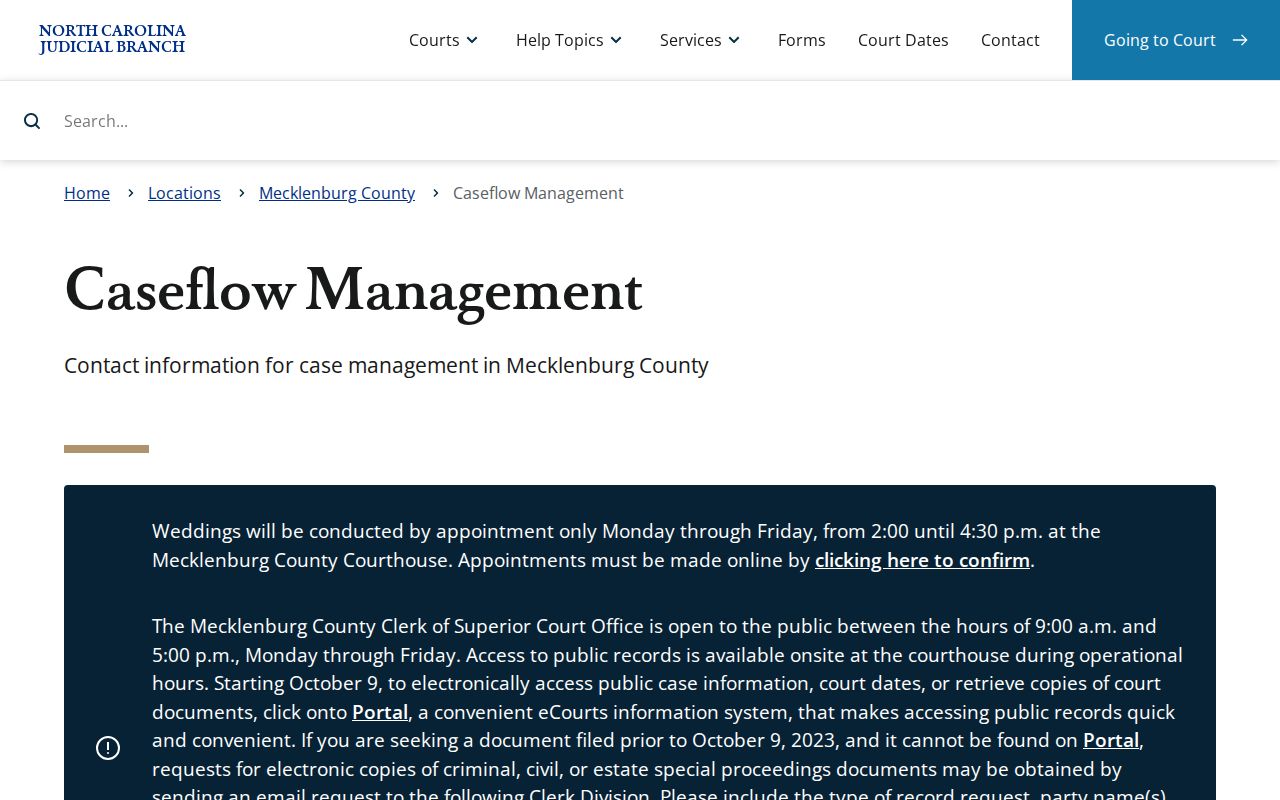
Category contacts beat a generic call. Reaching the right Mecklenburg caseflow contact by civil or criminal category gets you a real answer faster than dialing the courthouse with no details.
If You Miss a Court Setting
Missed a Mecklenburg court date? Move fast. Pull up your case number first. Then check the latest hearing details through Portal or Search Hearings. The Clerk of Superior Court, Caseflow Management, or the coordinator listed for your case category can tell you more. The court may have already set a new date or issued other instructions. You may see the letters FTA on a Mecklenburg County docket. They stand for failure to appear. The abbreviation alone will not spell out every consequence or the court's next move.
Don't count on the missed hearing resurfacing on a later calendar. A calendar call, a trial order, and an individual hearing each do different work in a court record. Call your lawyer too, if you have one. Only the court and the staff running the case can confirm what you still owe and what filing, if any, you need to make.
Missed a Setting? A missed Mecklenburg hearing can leave a failure-to-appear event in the case record, so confirm the current court instruction without delay.
Use the Clerk or the appropriate Caseflow Management contact to verify the latest setting rather than relying on an old notice.
For a legal decision about a missed Mecklenburg court setting, consult a licensed attorney.
Mecklenburg Court Date Contacts
Phone calls settle what the online docket cannot. Caseflow Management in Mecklenburg County takes scheduling questions at 704-686-0185. Separate lines cover Superior Civil Trials at 704-686-0186, District General Civil at 704-686-0188, and Superior Civil Motions at 704-686-0190. Coordinators for Superior criminal sessions also publish direct numbers. Call once the docket search shows a reset. The same goes for a record that will not load or a hearing date that needs a live confirmation.
For broader court records help, the Clerk of Superior Court answers at 704-686-0400. When the Portal lacks an older case file, the courthouse offers public self-service terminals along with paper records you can inspect in person. The Mecklenburg contact directory lists these office numbers and current routing. Check it before dialing.
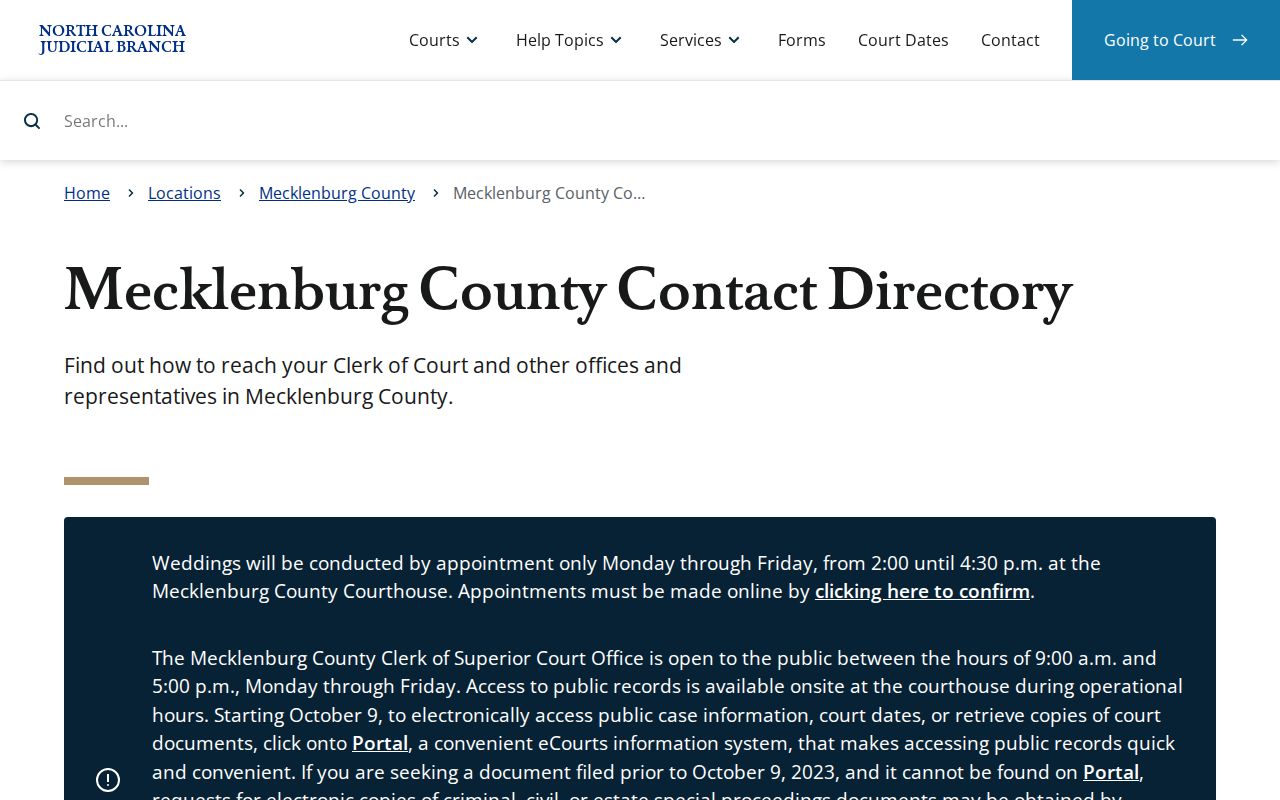
Courtroom assignments and coordinator lines shift over time, so treat the directory as the current source rather than a number printed on an older notice. A quick check there beats a dead phone line. One habit worth keeping: use the court calendar to learn which session a case sits in, then lean on the Clerk or caseflow contacts when the electronic record needs a fresher look at a Mecklenburg court date.